


Rope Strend Pro Premium, jute, natural, 26 mm, twisted, L-150 m
Strend Pro Premium rope has wide applications in agriculture and forestry, as well as at home or in the garden. It is ideal for example as a rail... full description
Cat. number:
432367
EAN code:
8584163073634
weight:
50,25 kg
Logistické balenie:
1 ks
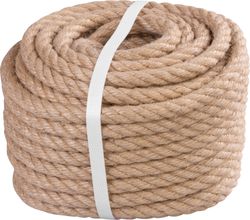
432362
Cat. number:
432362
weight:
1,54 kg
M. unit:
ks
Logistické balenie:
1 ks
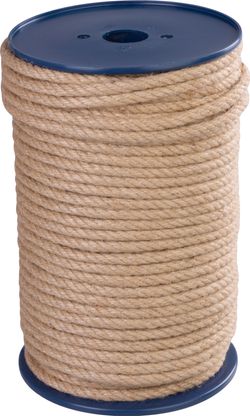
432356
Cat. number:
432356
weight:
4,8 kg
M. unit:
ks
Logistické balenie:
1 ks
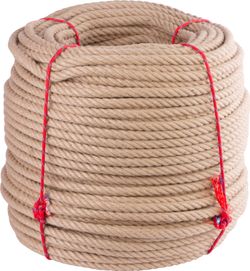
432365
Cat. number:
432365
weight:
31,68 kg
M. unit:
ks
Logistické balenie:
1 ks
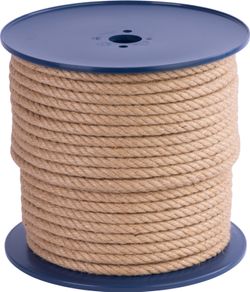
432357
Cat. number:
432357
weight:
7 kg
M. unit:
ks
Logistické balenie:
1 ks
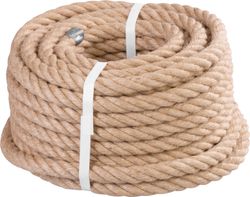
432363
Cat. number:
432363
weight:
0,74 kg
M. unit:
ks
Logistické balenie:
1 ks
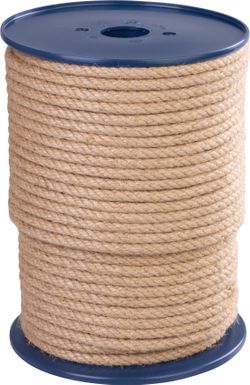
432355
Cat. number:
432355
weight:
3,9 kg
M. unit:
ks
Logistické balenie:
1 ks
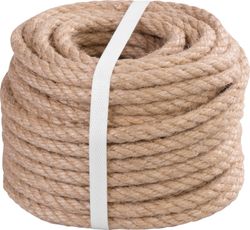
432361
Cat. number:
432361
weight:
0,99 kg
M. unit:
ks
Logistické balenie:
1 ks
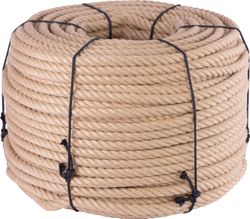
432366
Cat. number:
432366
weight:
51,7 kg
M. unit:
ks
Logistické balenie:
1 ks
Strend Pro Premium rope has wide applications in agriculture and forestry, as well as at home or in the garden. It is ideal for example as a railing or a support for flowers. Twisted jute ropes and cords are a very popular decorative element in both interiors and exteriors. Although this material does not excel in strength or resistance to environmental conditions, it does not slip in the hand and is suitable for sporting purposes, e.g. climbing. The length of the rope is 150 m, the diameter is 26 mm and the load capacity is 5100 kg.
The diameter of our ropes is measured according to the European standard EN 2307, which sets out the exact measurement procedure. However, it is important to know that the resulting rope diameter may have a certain tolerance. This deviation depends on the construction of the rope (e.g. type of braid, number of strands) and on the material from which the rope is made.
Special attention is deserved by ropes made of natural fibres, such as jute or sisal. In these ropes, the diameter may vary between individual production batches, because natural yarns have natural differences in thickness, elasticity and absorbency. These deviations are not a defect, but a common characteristic of natural materials.
Indicative diameter tolerance of ropes
Rope type: Material: Construction: Diameter tolerance
Natural rope: Jute, sisal: 3-4 strand: +/- 12%
Synthetic ropes twisted and braided: PP, PPV, PES, PA: 3, 4, 8, 16, 24, 32, 40, 44, 48 strand: +/- 8%
Note: For natural ropes, the tolerance may be higher due to the influence of moisture, storage and natural variability of fibres.
When selecting a rope, we recommend taking this tolerance into account, especially if the rope diameter is critical for its use (e.g. in combination with fittings, pulleys or other technical elements).
Priemer hadice:
26.0
Priemer (mm):
26
Dĺžka (m):
150
Nosnosť (kg):
5100