


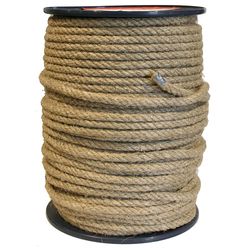
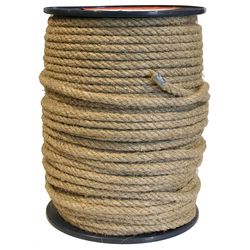
Rope Lanex S01014, 10 mm, J/PP, jute, load capacity 622 kg, L-100 m
Twisted jute ropes and cords are a very popular decorative element in both interiors and exteriors. They have a wide range of uses in agriculture... full description
Cat. number:
432067
EAN code:
8590869116278
weight:
0,05 kg (package 5 kg)
Logistické balenie:
100 m
Minimálne vyskladňovacie množstvo:
100 m
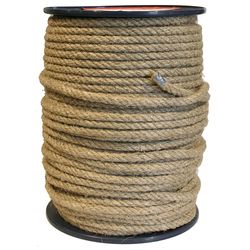
432070
Cat. number:
432070
weight:
0,23 kg
M. unit:
m
Logistické balenie:
45 m
Minimálne vyskladňovacie množstvo:
45 m
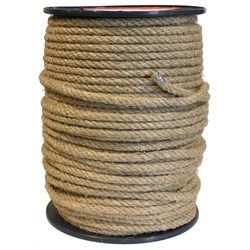
432066
Cat. number:
432066
weight:
0,04 kg
M. unit:
m
Logistické balenie:
100 m
Minimálne vyskladňovacie množstvo:
100 m
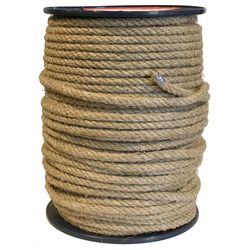
432071
Cat. number:
432071
weight:
0,29 kg
M. unit:
m
Logistické balenie:
30 m
Minimálne vyskladňovacie množstvo:
30 m
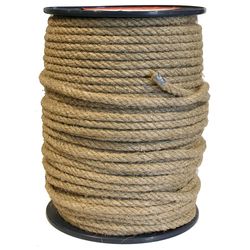
432111
Cat. number:
432111
weight:
0,47 kg
M. unit:
m
Logistické balenie:
20 m
Minimálne vyskladňovacie množstvo:
20 m
432069
Cat. number:
432069
weight:
0,11 kg
M. unit:
m
Logistické balenie:
100 m
Minimálne vyskladňovacie množstvo:
100 m
432068
Cat. number:
432068
weight:
0,08 kg
M. unit:
m
Logistické balenie:
100 m
Minimálne vyskladňovacie množstvo:
100 m
Twisted jute ropes and cords are a very popular decorative element in both interiors and exteriors. They have a wide range of uses in agriculture and forestry, as well as at home or in the garden. They are ideal, for example, as handrails or supports for flowers. Although this material does not excel in strength or resistance to environmental influences, it does not slip in the hand and is suitable for sporting purposes, e.g. rope climbing.
Ropes (diameter from 8 mm and above) are four-strand with the addition of a polypropylene strip; cords (diameter up to 7 mm) are three-strand with the addition of a polypropylene fibre. The added materials guarantee better strength.
Key properties:
- good resistance to alkalis and organic solvents,
- low resistance to UV radiation.
The diameter of our ropes is measured according to the European standard EN 2307, which sets out the exact measurement procedure. However, it is important to know that the resulting rope diameter may have a certain tolerance. This deviation depends on the construction of the rope (e.g. type of braid, number of strands) and on the material from which the rope is made.
Ropes made from natural fibres deserve special attention, such as jute or sisal. In these ropes, the diameter may vary between individual production batches, because natural yarns have natural differences in thickness, elasticity and water absorption. These deviations are not a defect, but a common characteristic of natural materials.
Indicative diameter tolerance of ropes
Rope type: Material: Construction: Diameter tolerance
Natural rope: Jute, sisal: 3–4 strand: ± 12%
Synthetic ropes twisted and braided: PP, PPV, PES, PA: 3, 4, 8, 16, 24, 32, 40, 44, 48 strand: ± 8%
Note: For natural ropes, the tolerance may be higher due to the effects of moisture, storage and the natural variability of fibres.
When selecting a rope, we recommend taking this tolerance into account, especially if the rope diameter is critical for its use (e.g. in combination with fittings, pulleys or other technical elements).
Druh produktu:
Lano
Materiál:
Juta/polypropylén
Priemer (mm):
10
Druh produktu:
Lano
Priemer (mm):
10
Dĺžka:
100 m
Dĺžka (mm):
100000
Nosnosť (kg):
622
Typ:
lano